AI Agents in Logistics: The New Standard for Efficiency

Updated 6/22/2026
The logistics sector is changing faster than ever. Digitalization and automation are forcing companies to work smarter to stay competitive. One of the most important innovations at the moment is the rise of AI agents in logistics.
The logistics sector is changing faster than ever. Digitalization, driver shortages, and rising customer expectations are forcing companies to work smarter to stay competitive. One of the most important innovations right now is the rise of AI agents for logistics: software that doesn’t just analyze data, but acts on it. These digital colleagues take over repetitive order and communication tasks, reduce errors, and let planners focus on the exceptions that actually need a human.
What are AI agents in logistics?
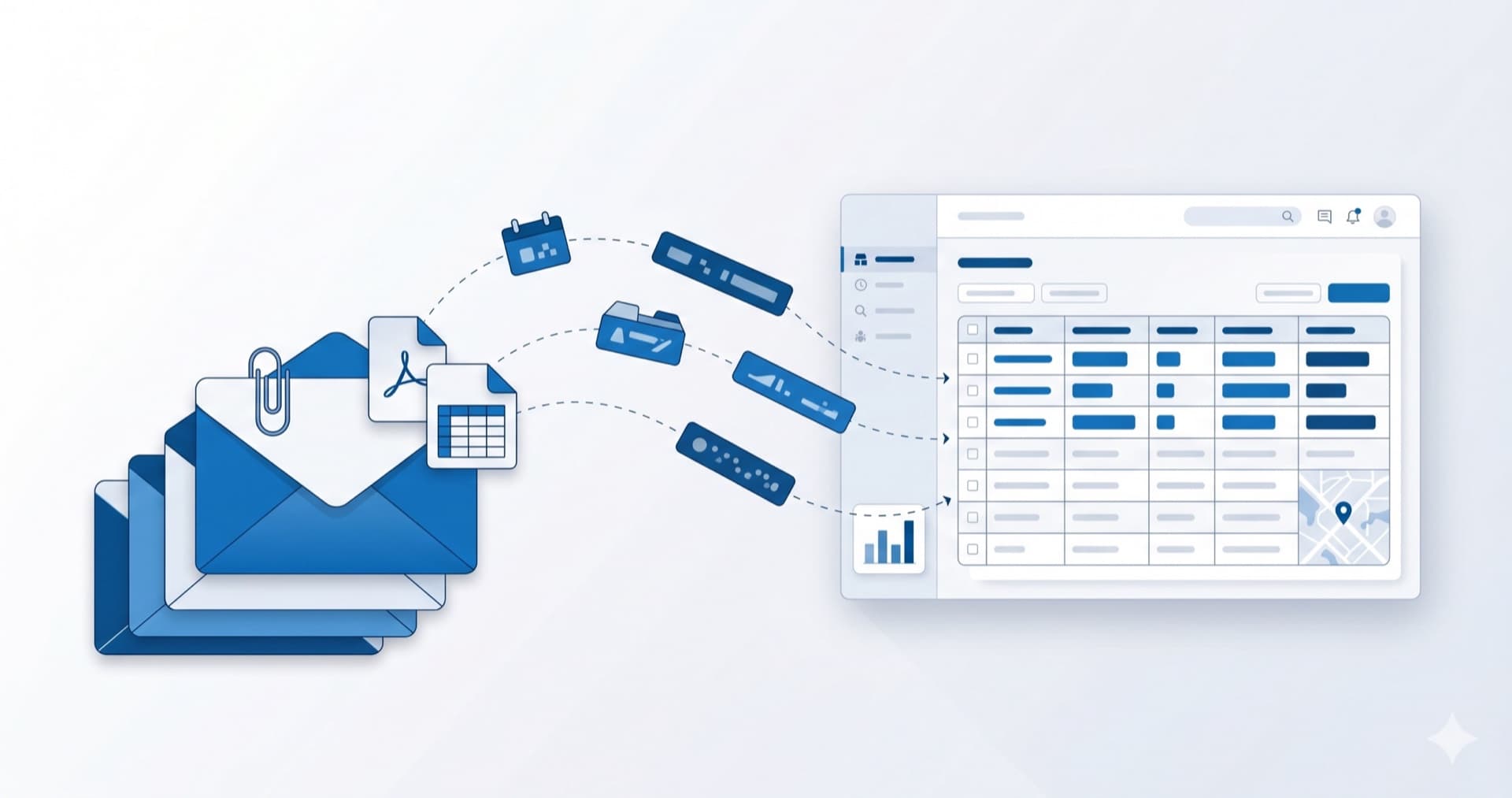
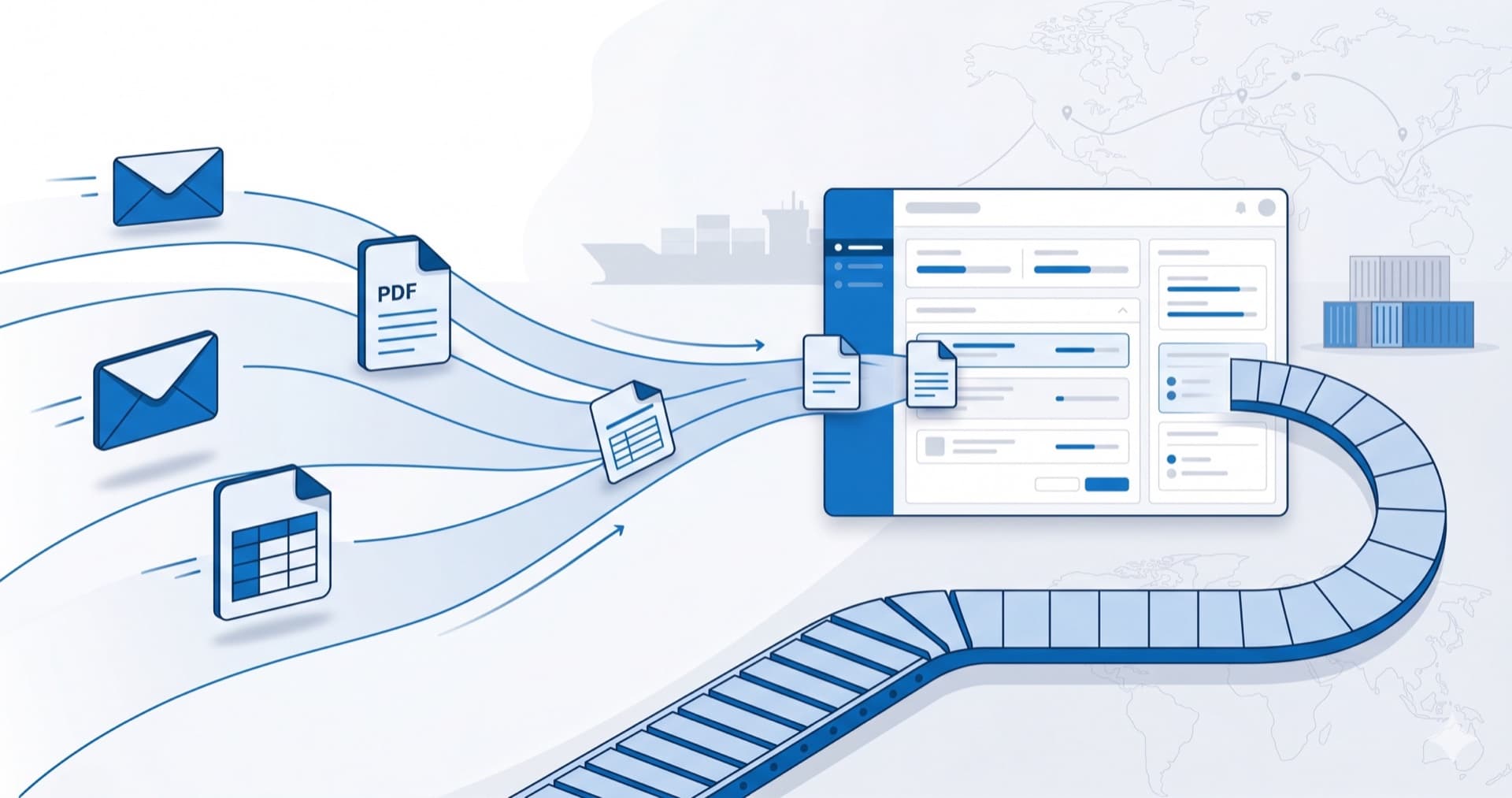
AI agents are intelligent software applications that can independently execute or support a process from start to finish. In logistics, an agent can read an incoming order, validate it against your master data, enter it into your TMS, and send the customer a confirmation — without a planner retyping a single field. Where a traditional script follows fixed rules, an AI agent interprets unstructured input such as a PDF, an email body, or a scanned document, and decides what to do next. Tasks that used to occupy several employees can be handled in seconds.
AI agents vs. traditional logistics automation
Classic automation — EDI links, fixed mappings, RPA macros — only works when every message arrives in exactly the expected format. The moment a customer changes their layout, adds a free-text note, or sends an order as a photo, the rule breaks and a human has to step in. AI agents are built for exactly that messiness: they understand context, handle variation, and ask for confirmation when they are unsure instead of failing silently. That makes them far better suited to the long tail of partners who will never send structured EDI.
Why AI agents matter for logistics efficiency
Logistics revolves around speed, precision, and reliability. Errors in order data or address information lead to delays, extra costs, and dissatisfied customers. AI agents tackle this at the source: they analyze data in real time, flag anomalies, and correct or query errors before they reach the planning system.
AI agents automate work that normally requires significant manual effort, such as:
Reading orders from emails and attachments
Validating order data against master data
Drafting customer replies in your own tone of voice
Connecting systems through APIs and portals
Where AI agents add value across the logistics chain
The use of AI agents is broad and growing quickly. The highest-impact applications include:
Order processing: Agents read emails, extract order details from attachments with automatic document processing, and enter them straight into the planning system.
Data quality: Agents check addresses, codes, and order lines so planners always work with accurate information.
Customer communication: With email automation, agents write customer-focused replies in your company’s style and keep everyone informed automatically.
Planning and updates: Combined with onboard computers and portals, agents process updates immediately and make them visible to every stakeholder.
The long-term benefits of AI agents for logistics
Deploying AI agents delivers operational gains today and builds a future-proof infrastructure for the companies investing now:
Higher efficiency: fewer manual tasks and faster order processing.
Fewer errors: data is continuously checked and corrected.
Better customer satisfaction: faster, error-free responses build trust.
Scalability: agents grow with your volume without extra headcount.
How to get started with AI agents in logistics
You don’t need a multi-year IT project to benefit. The most successful teams start with the single process that causes the most manual work — usually order entry from email and PDFs — and expand from there. That focus is also why so many AI projects in logistics fail before they begin: they are scoped too broadly. For a practical, step-by-step approach, see our guide on how logistics companies can get started with AI.
Frequently asked questions about AI agents in logistics
What is an AI agent in logistics?
An AI agent is software that can carry out a logistics task end to end — for example reading an order from an email, validating it, and entering it into the TMS — while interpreting unstructured input and asking for confirmation when needed.
How are AI agents different from chatbots?
A chatbot answers questions. An AI agent takes action: it processes documents, updates systems, and triggers follow-up steps, working inside your existing workflow rather than in a chat window.
Are AI agents reliable enough for order processing?
Yes — when they are kept in the loop with your master data and configured to escalate uncertain cases. Chainfill’s agents validate every order against your own data and flag exceptions for a human instead of guessing.
The role of Chainfill
At Chainfill, we develop AI agents that integrate seamlessly into the logistics workflow. Our solutions support both small carriers and large logistics organizations, combining powerful AI with user-friendly interfaces so everyone can benefit from this technology. With Chainfill, AI agents are not a future vision — they become everyday practice.
Want to see what AI agents could do for your order flow? Book a demo and we’ll show you on your own documents what can be automated.

About the author
Finn
Oprichter & product
Finn is medeoprichter van Chainfill en leidt de productontwikkeling. Hij richt zich op het inzetten van AI om documentverwerking in transport en logistiek te automatiseren.