Automated order entry without EDI: how forwarders keep the order flow running

Not every customer sends orders via EDI, and rolling out EDI per partner takes time you do not have. Your order flow does not need to wait for it. Here is how forwarders process orders automatically, with or without EDI.
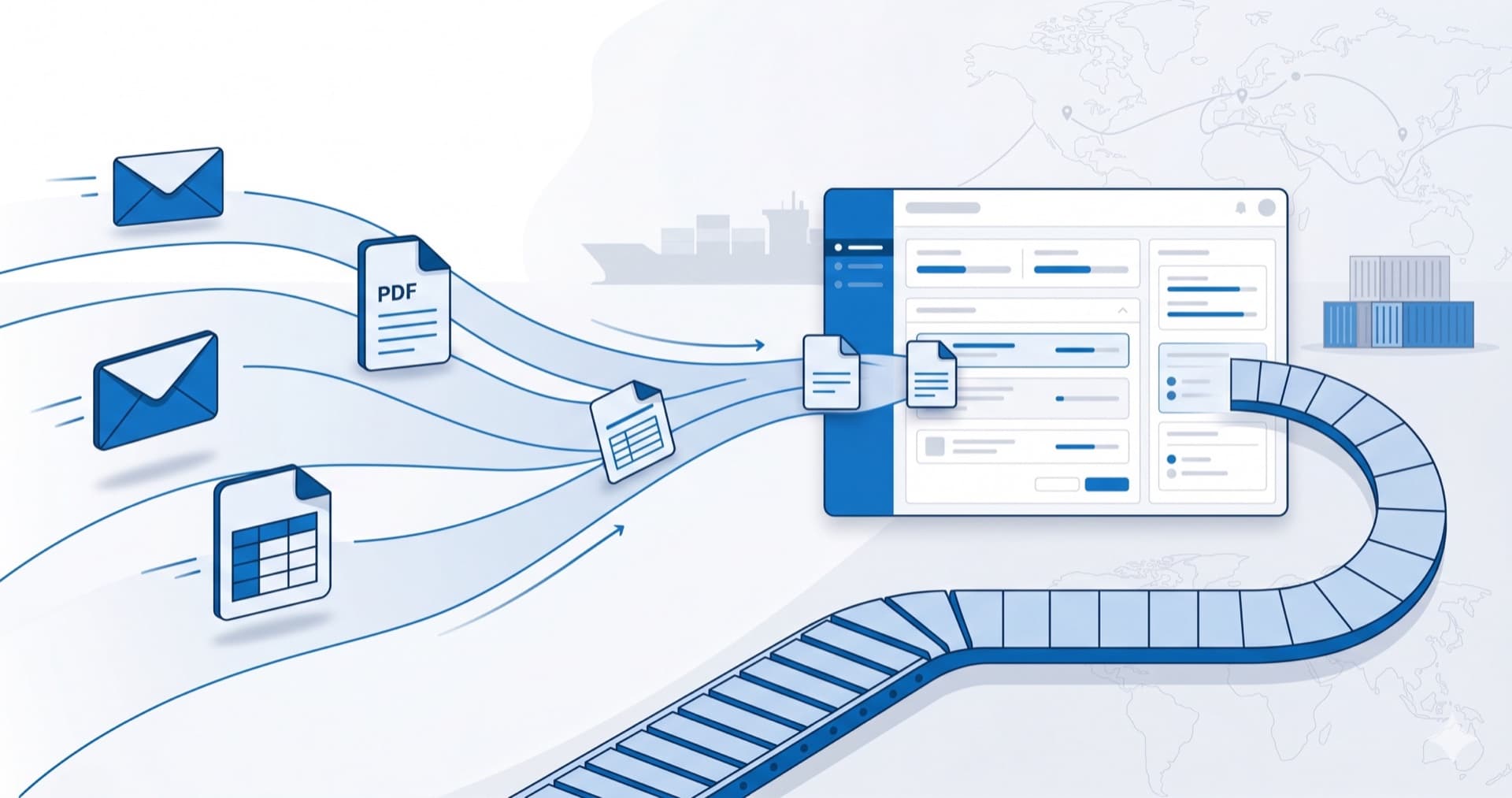
Automated order entry without EDI is not a luxury for many forwarders, it is a necessity. EDI works well with large, fixed partners, but a large share of orders arrives by email, PDF and Excel from customers who will never implement EDI. Waiting until everyone supports EDI is not an option, and building a connection for every new partner takes weeks. So the question is not whether to replace EDI, but how to keep the order flow running regardless of how a customer sends in their orders.
Why EDI stalls with small and mid-sized partners
EDI assumes fixed agreements: an agreed message format, a mapping per partner and an onboarding that can take months. For your largest customers that pays off. For the long tail of smaller shippers and occasional clients it does not. They simply send an email with a PDF or an Excel file. The result: part of your orders flows automatically through EDI, while the rest is still retyped by hand. That split is where most of the time and errors come from.
What "without EDI" means in practice
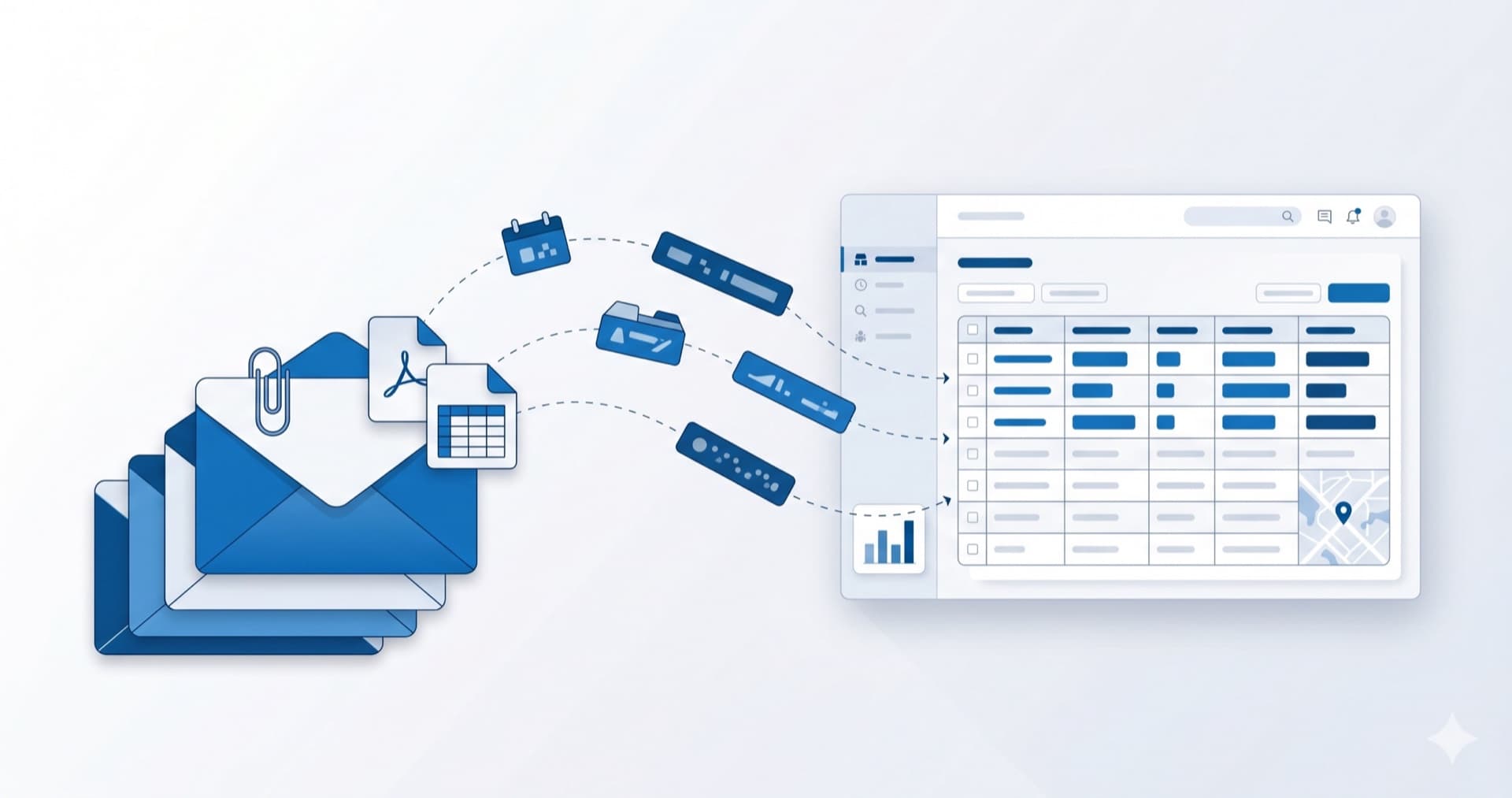
Order entry without EDI means reading the order from the document the way the customer delivers it, instead of demanding a standardised message. AI extraction pulls the relevant fields, such as pickup and delivery address, references, packages, weight and dates, straight from the email, PDF or Excel and writes them into your TMS in a structured form. The customer changes nothing about how they work, and you do not have to build a connection per partner. We wrote earlier about how to keep your order flow running without EDI.
AI extraction vs. classic EDI mapping
The difference is in onboarding and flexibility. Classic EDI needs a new mapping and test round per partner; change a format and the connection breaks. AI extraction learns from examples and handles variation, so a new customer is live in days instead of months. For reliability, a human stays in the loop: the system processes the standard cases automatically and flags the doubtful ones for review. That combines the speed of automation with the certainty transport orders require.
Hybrid: EDI where it works, AI where it must
You do not have to abandon EDI. The strongest setup is hybrid: keep EDI for the partners where it already runs, and use AI extraction to catch everything outside it. One order flow, one way of working for your planners, regardless of channel. See how an EDI alternative for forwarders works, or read why the new standard for EDI starts here.
Conclusion
EDI stays valuable, but it should not hold your order flow hostage. By reading orders without EDI automatically from email, PDF and Excel, you process every customer the same way, without months of onboarding per partner. That is the difference between waiting on your partners and keeping the order flow running yourself.
Want to see how that works for your order flow? Book a demo and we will show it on your own orders.

About the author
Finn
Oprichter & product
Finn is medeoprichter van Chainfill en leidt de productontwikkeling. Hij richt zich op het inzetten van AI om documentverwerking in transport en logistiek te automatiseren.