Order data from email attachments straight into your TMS: stop retyping

The same routine every morning: an inbox full of orders, attachments to open, fields to retype into the TMS. It feels like part of the job. Until you see how much time and how many errors it costs, and how little of it is still necessary.
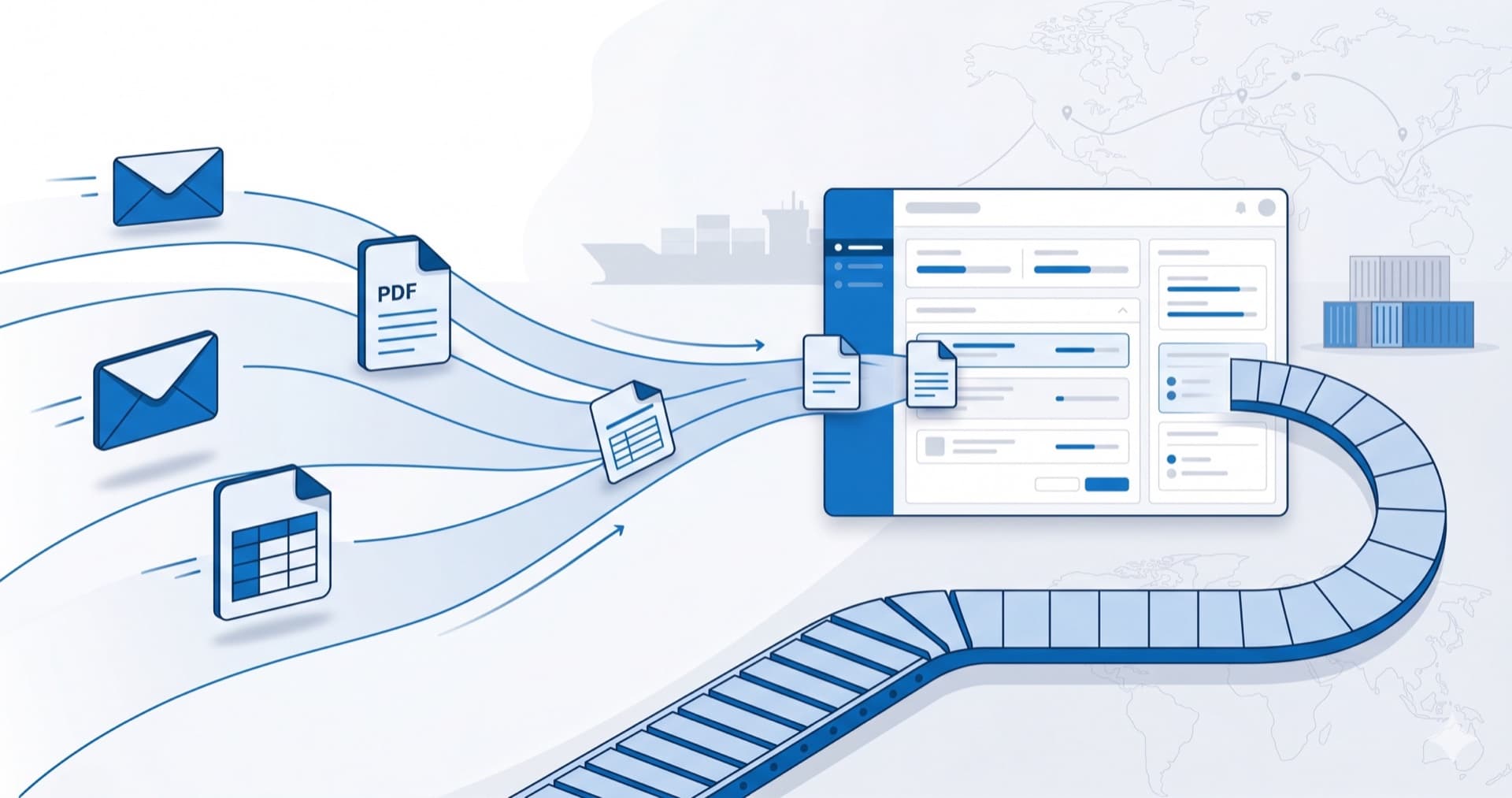
Every morning your planners open dozens of emails with orders and retype them by hand into the TMS. The order sits in a PDF, sometimes in an Excel file, sometimes just in the body of the email. Someone opens the attachment, reads the fields, and types them in one by one. It feels like unavoidable work that simply comes with the job. That is exactly the problem: it has not been necessary for a long time.
The morning stream: emails, attachments, retyping
Sound familiar? Orders trickle in all day through different mailboxes. Every shipper uses their own format, so there is no fixed place where the pickup address, the reference or the package count lives. The planner constantly switches between the inbox, the attachment and the TMS. One missing field means emailing back and waiting. It is this kind of fragmented, repetitive work that eats the morning before the real planning even begins.
What manual retyping really costs
The cost is bigger than the time on the clock. Typing errors in a pickup address or reference carry through into execution and cost far more to fix later. Evening hours and peaks demand extra capacity at a time when the labour market for planners is tight. And experienced planners who fill their day with retyping are not doing the work you hired them for. We covered those hidden costs of manual order entry in detail earlier.
How AI pulls orders from email and attachments
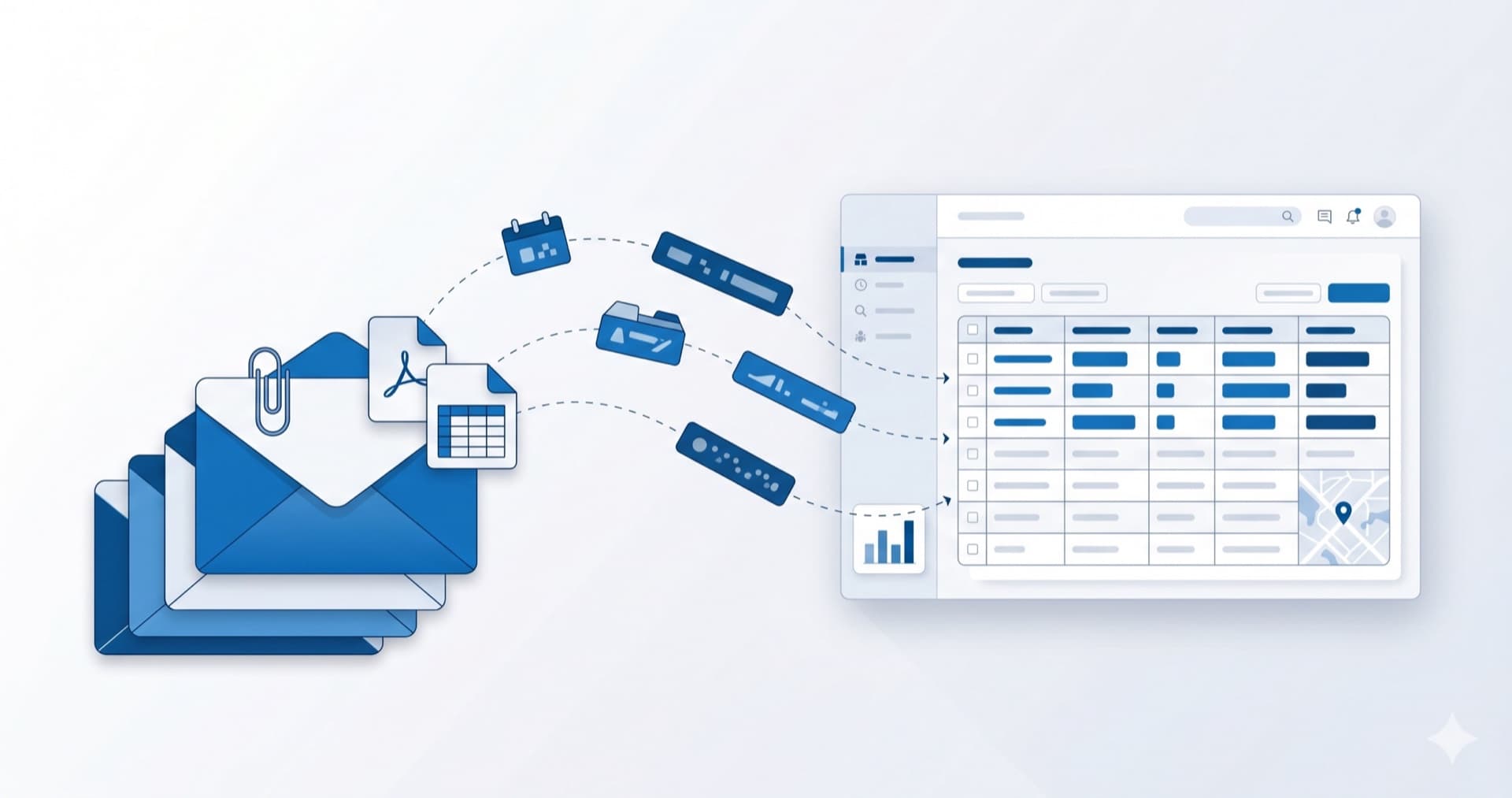
It does not have to be this way. With email automation, the system reads the incoming email and recognises whether it contains an order. Document processing then pulls the fields from the attachment, whether that is a PDF, an Excel file or the body of the email itself, and prepares them in a structured form for the TMS. It does not matter that every shipper uses their own format: the model learns those variants and adapts to your order flow.
What the planner is left with
The planner no longer retypes, but only checks the exceptions the system flags itself. In practice, an order flow that used to take 4 hours or more of manual work drops to around 15 minutes of checking, with roughly 80 percent time savings and 99.8 percent accuracy. The team scales with more orders without hiring extra people, and your planners get back to the work they are good at.
Conclusion
Retyping orders from email attachments feels like a fixed part of the job, but it is exactly the step that disappears most easily. By having email and attachments read automatically, you free up time, accuracy and scarce planners for the work that truly matters. Read more in smarter email processing with AI.
Curious what it does to your inbox? Book a demo and we will show it on your own orders.

About the author
Finn
Oprichter & product
Finn is medeoprichter van Chainfill en leidt de productontwikkeling. Hij richt zich op het inzetten van AI om documentverwerking in transport en logistiek te automatiseren.