Why AI Projects in Logistics Fail Before They Even Begin

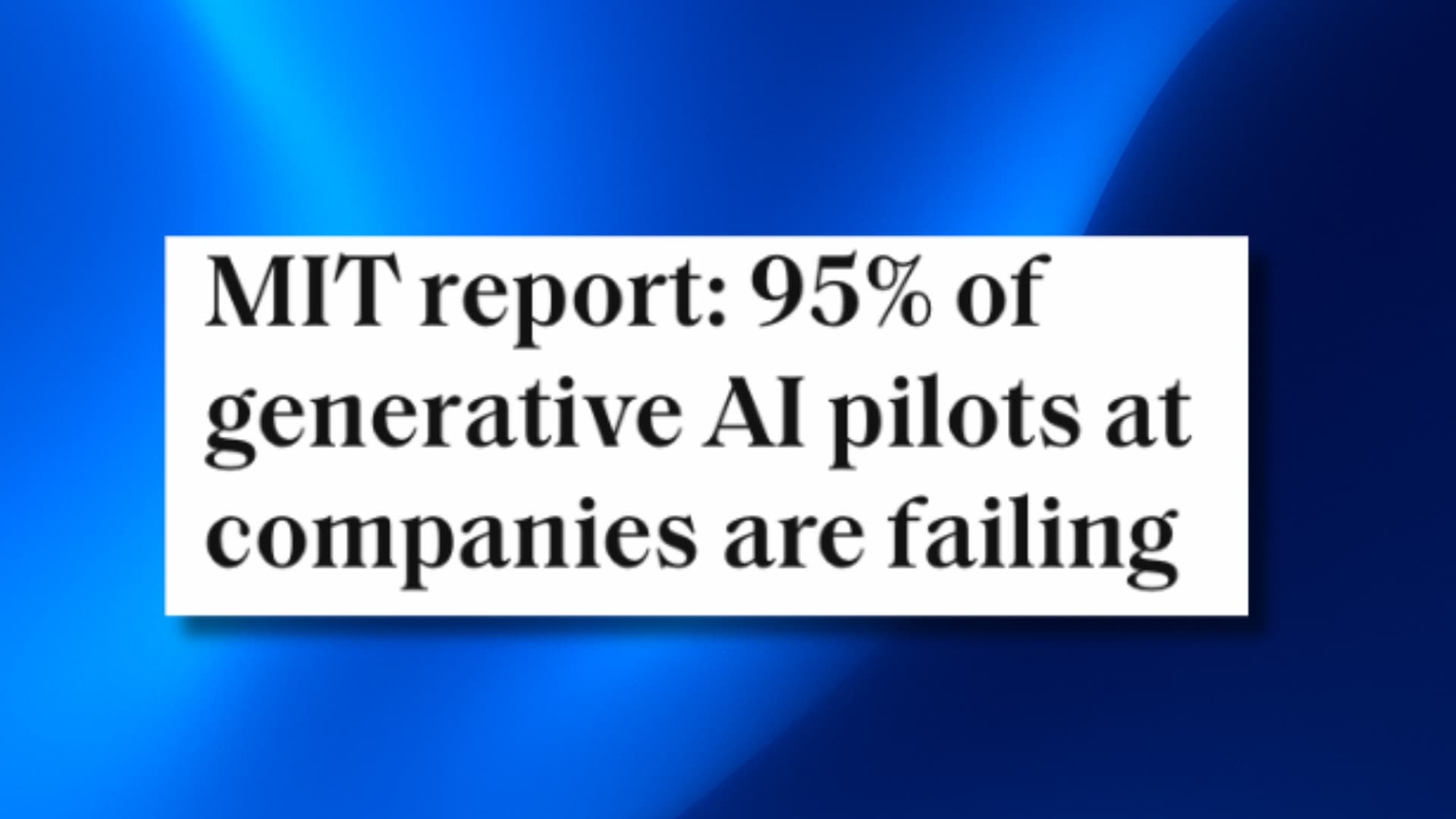
AI promises a revolution in logistics with less manual work and faster processes, yet many projects get stuck in pilots or fail in real-world use. The problem is not the technology, but the setup. Many AI projects fail before they even start.
One of the biggest misconceptions is that AI starts with data. Companies collect documents, emails, and datasets and expect a model to automatically structure them. But without clear context, AI does not understand what it is looking at.
In logistics, that context is everything. An email might contain a new order, but it could just as easily be a change to an existing shipment. A PDF might be an invoice, but it could also be a packing list or a customs document. Without a clear framework to place that information in, AI is left guessing. What works in a demo quickly breaks once real-world variation increases.
Behind this lies a second, more fundamental issue: processes that were never made explicit. In many logistics organizations, knowledge lives in people, not in systems. Employees know what to do, recognize patterns, and resolve exceptions without it ever being formally documented.
That works as long as humans are doing the work, but AI has no intuition. It needs structure. If it is not clearly defined what constitutes an order, when data is complete, or which steps follow after an input, AI can only make assumptions. And assumptions at scale lead to errors.
Even when context and processes are partially defined, projects often fail due to a third factor: exceptions. In theory, logistics processes are structured. In practice, almost everything deviates. Documents miss fields, data is incorrect, customers send information in different formats, or change instructions at the last minute.
These are not edge cases, but everyday reality. Many AI solutions are built for ideal scenarios where everything is correct. As soon as that is no longer the case, automation breaks down and manual work takes over again. This eliminates much of the intended efficiency.
Underlying this is a fundamental misconception. AI is often approached as an addition to existing processes, while in reality it requires those processes to be redesigned. It forces organizations to make explicit what was previously implicit. Which information is required, which steps follow, and how deviations are handled.
Without that foundation, AI remains a loose layer on top of an unclear system.
AI projects in logistics rarely fail because of the technology itself. They fail because they attempt to automate complex work without first making it understandable.
Successful implementations therefore do not start with models, but with structure. They map context, define processes, and explicitly design how exceptions are handled. Only once that foundation is in place can AI do what it does best: accelerate work, reduce errors, and make processes scalable.
Not as an experiment, but as part of a system that actually works.
AI projects in logistics do not fail because of poor technology, but because of a lack of context, process, and structure. Organizations that focus on building this foundation first are the ones that succeed in turning AI into real operational impact.

About the author
Yannick
Marketing
Yannick is verantwoordelijk voor marketing bij Chainfill en schrijft over de rol van AI en automatisering in de transport- en logistieksector.