AI Order Processing in Transport and Logistics: The New Standard!

Updated 6/22/2026
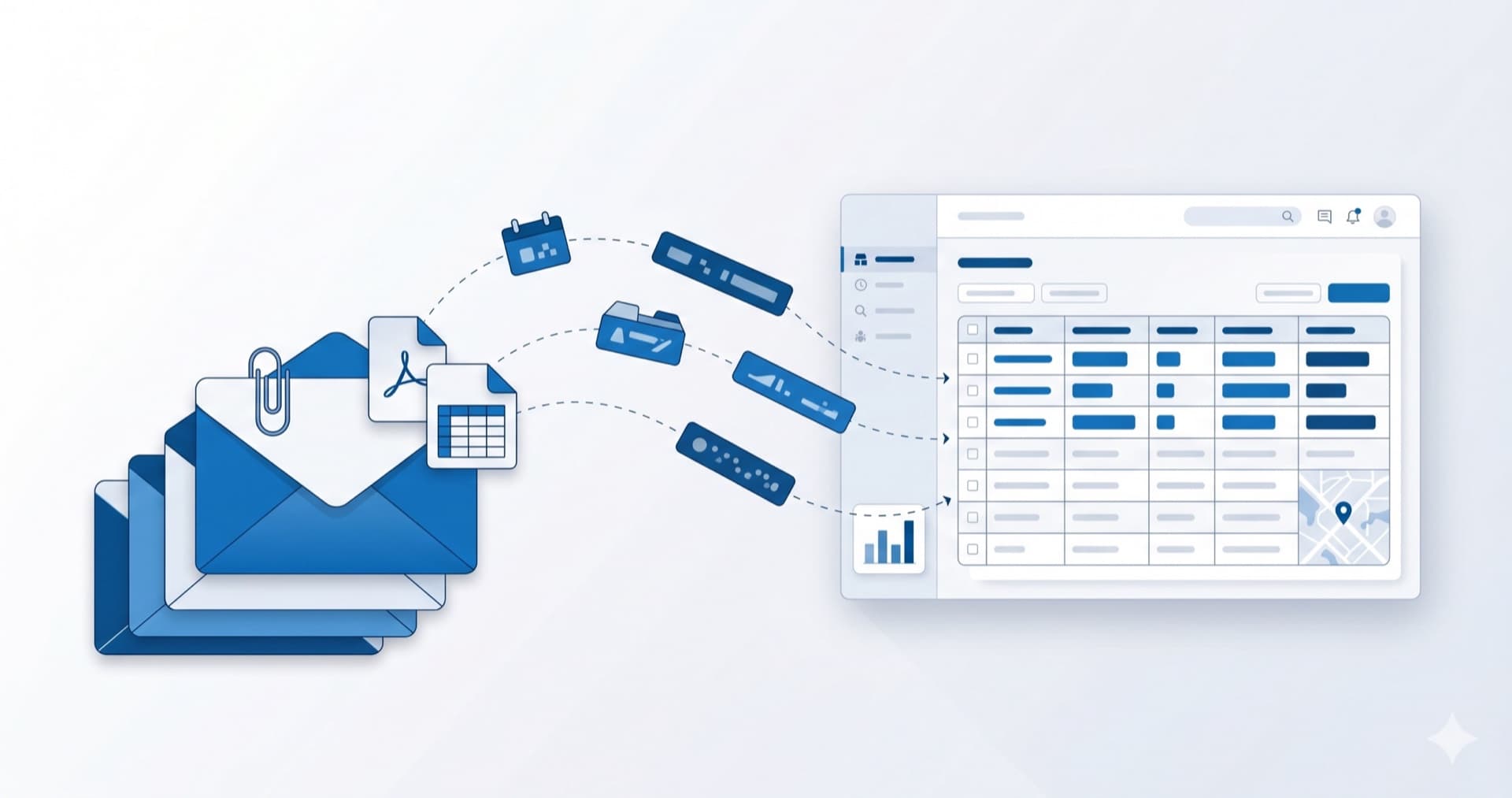
Transport companies and logistics providers deal with massive amounts of data every day. Orders arrive via email, often with PDF or Excel attachments. Planners spend hours manually retyping and verifying the information.
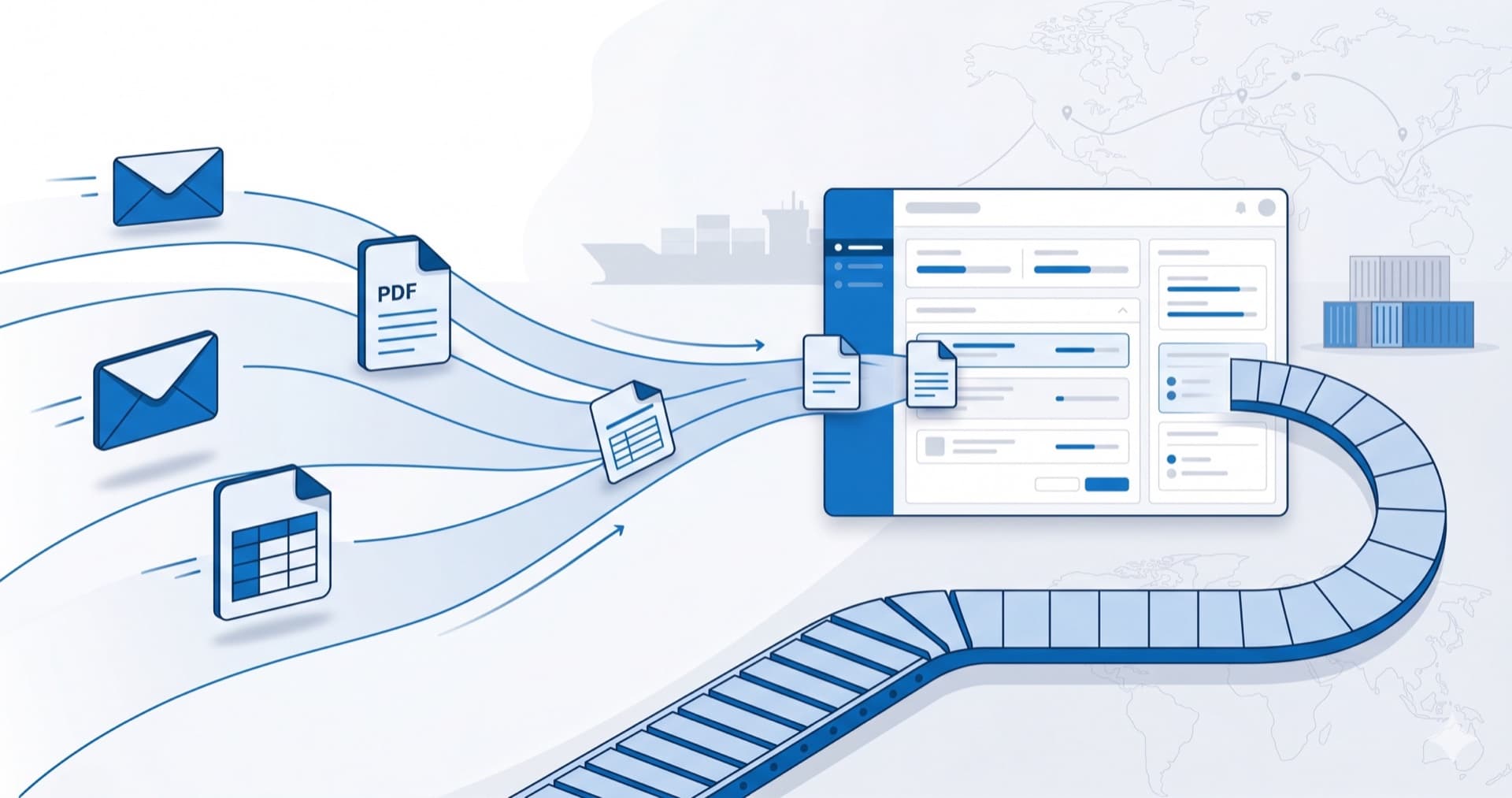
Transport companies and logistics providers handle massive amounts of data every day. Orders arrive via email, often with PDF or Excel attachments, and planners spend hours manually retyping and verifying information. In a sector where every mistake causes delays and extra costs, that process is not only time-consuming but risky. Artificial intelligence order processing removes the retyping entirely: it reads the order, validates it, and enters it into your system for you.
What is AI order processing?
AI order processing uses artificial intelligence to automatically recognize, extract, and accurately enter incoming orders into a carrier’s system. It goes beyond simple OCR: an AI data processor understands the context of an email, extracts the correct data from a container booking or transport order, and places it directly into the TMS or WMS — even when every customer sends a different layout.
Artificial intelligence order processing vs. OCR and EDI
Traditional OCR turns a document into text but doesn’t understand it, so a human still has to map every field. EDI works only when a partner sends data in one fixed, agreed format — which most of the long tail of customers never will. Artificial intelligence order processing sits in between and handles the messy reality: it interprets free-text emails, varied PDF layouts, and Excel attachments, decides what each value means, and asks for confirmation when it is unsure instead of guessing.
AI order processing for container transport
Precision is critical in container logistics. A wrong container number, an incorrect loading or unloading date, or a wrong address can cost thousands of euros. AI order processing for container transport virtually eliminates these errors: the software recognizes standard shipping formats, detects anomalies, and automatically links the correct data to the right container.
AI email processing: orders straight from the inbox
Many orders and transport assignments still arrive by email, and sifting through dozens of messages a day doesn’t scale. With AI email automation, incoming messages are processed automatically: attachments are read, and all information is organized by customer or order. Planners review instead of type. For a deeper look, see smarter email processing with AI in transport and logistics.
What an AI data processor like Chainfill does
The core of this technology — the AI data processor behind automatic document processing — can:
Normalize addresses and check them against reference databases
Verify units (kg vs. lbs, pallets vs. packages)
Perform automatic validations, e.g. whether dates match the loading/unloading time zone
Apply rules for ADR goods and specific customer requirements
Automated order entry: from email to TMS without retyping
The end goal is automated order entry: an order enters as an email or attachment and lands in your TMS as a clean, validated record, with the planner only reviewing the exceptions. This is also where AI order processing connects to the wider shift toward AI agents in logistics, which don’t just read data but act on it across your workflow.
Why switch now?
The logistics sector faces rising costs, staff shortages, and customers demanding faster service. Companies investing in AI for transport and email processing today gain an immediate advantage:
Faster order processing
Fewer errors and delays
Lower operational costs
Greater peace of mind on the shop floor
Frequently asked questions about AI order processing
What is artificial intelligence order processing?
It is the use of AI to read an incoming order from an email, PDF, or Excel file, validate the data, and enter it into a TMS or WMS automatically — interpreting context rather than relying on fixed templates.
How is AI order processing different from EDI?
EDI needs every partner to send data in one agreed format. AI order processing handles the orders that never fit a standard — free-text emails, varied PDFs, scans — so you can automate the long tail of customers who will never go live on EDI.
Is it accurate enough for container transport?
Yes — when the AI validates every field against your master data and escalates uncertain cases to a human. Chainfill checks container numbers, dates, and addresses and flags anomalies before they reach planning.
Conclusion
AI order processing, container transport automation, and AI email assistants are no longer futuristic concepts. They are available today and can make the difference between falling behind and staying ahead. Companies that use AI smartly as a data processor and order handler can prepare their transport operations for the next phase of digital logistics.
Curious what artificial intelligence order processing would do for your order flow? Book a demo and we’ll show you on your own documents what can be automated.

About the author
Finn
Oprichter & product
Finn is medeoprichter van Chainfill en leidt de productontwikkeling. Hij richt zich op het inzetten van AI om documentverwerking in transport en logistiek te automatiseren.