No EDI? Here’s How to Keep Your Order Flow Running Anyway

Many clients lack EDI, but orders don’t need to pile up or endless emailing. With a clear template, simple checks, and clear agreements, you can run the same smooth workflow EDI provides—without technical jargon.
What You Actually Need
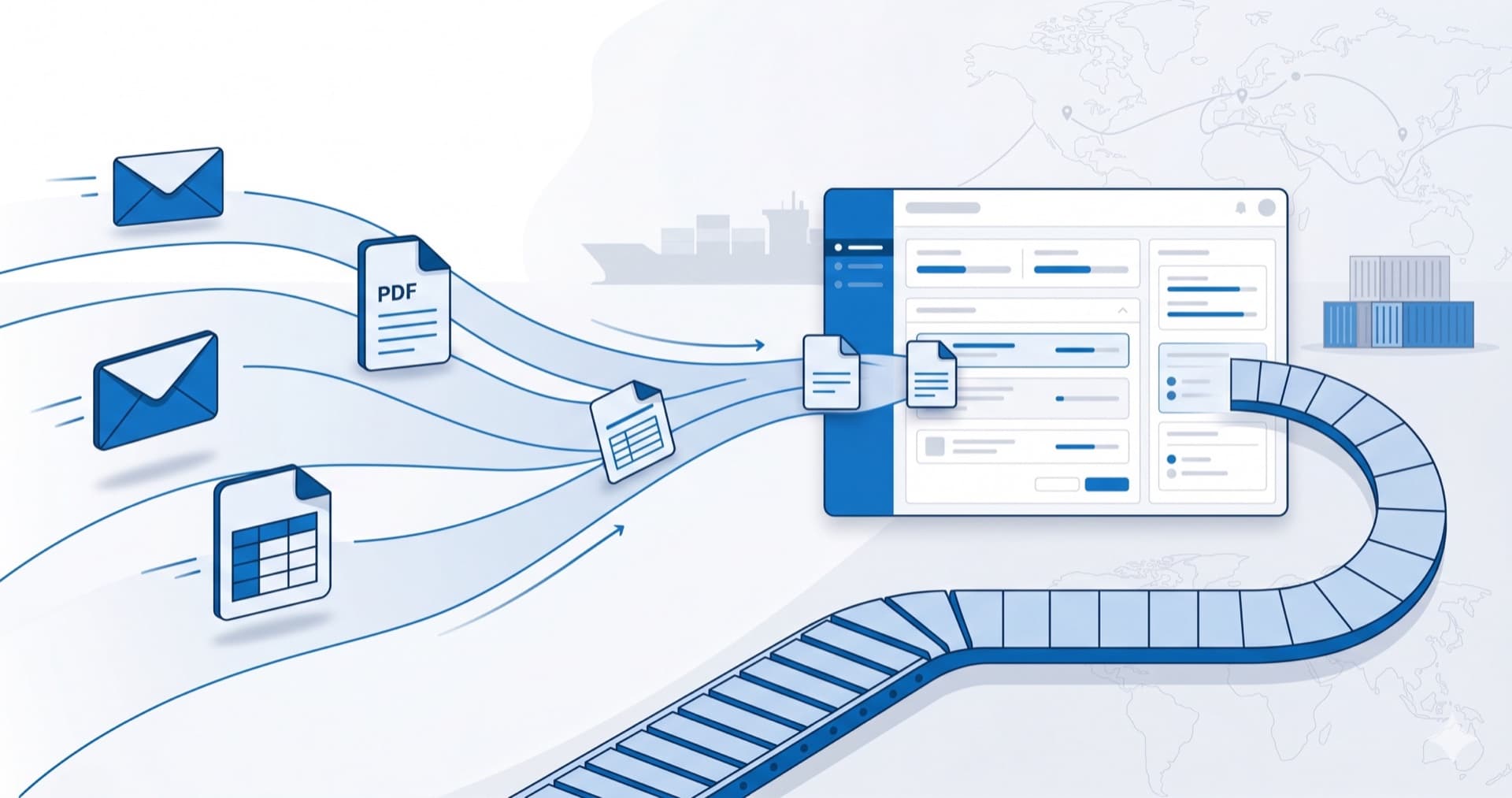
Your client doesn’t have to buy anything new. They simply send emails, PDFs, or Excel files. You ask for a few fixed fields and provide a clear example—think reference numbers, addresses, quantities, and a short description. This is the same information EDI uses. The difference? AI reads it for you.
How AI Solves This in 3 Simple Steps
Read and recognize
AI reads the email and attachments. It identifies fields such as reference numbers, addresses, and quantities. Free text is converted into structured fields.
Check and complete
Basic rules are pre-set. Postal codes match cities, quantities are greater than zero, times are logical. If something is incorrect, you receive a single focused question—no back-and-forth.
Book and feedback
Correct orders are automatically entered into your system. You get a confirmation, and the client may receive a short question or confirmation if needed. Everything is fully traceable.
What You Notice from Day One
Fewer follow-up questions and less waiting time.
Fewer costly errors later.
Faster confirmations to clients.
Planners focus on exceptions instead of retyping.
Example of a Good Order Email
Subject: Order ACME-PO-78421
Pickup: Keizersgracht 123, 1015CJ Amsterdam, NL
Delivery: Spoorlaan 12, 5038CB Tilburg, NL
Description: Electronics
Quantity: 22 packages
Weight: 860 kg
Ready for loading: 26-09-2025 08:00
Cut-off time: 26-09-2025 16:00
Notes: Call upon arrival
AI reads this immediately. No attachments are necessary—short and complete is enough.
Common Errors AI Prevents
Abbreviations in addresses that cause detours
Quantities without units
Conflicting times
Long notes where key details get lost
AI recognizes these patterns and only asks for clarification when truly necessary.
When to Switch to EDI
When volumes grow or clients consistently use the same format, EDI becomes a logical next step. The fields are the same; you replace email with a fixed connection while keeping AI checks as an extra safety net.
Why Chain Fill
Chain Fill is AI order processing for transport and logistics. It reads emails and attachments, applies fixed rules, and automatically books correct orders. Doubtful cases go to a staff member with a short explanation. You remain in control while gaining immediate time and quality benefits—today without EDI, tomorrow with EDI if desired.
Start Small and See the Impact
Begin with one client and one week of orders. Use a simple template and the three basic checks. Measure three things: order processing time, number of follow-ups, and error rate. You’ll quickly see where the gains are and whether EDI is needed later.
Samengevat
Geen EDI is geen probleem als AI de standaard bewaakt.
Eén duidelijk voorbeeld en drie controles leveren direct rust op.
Chain Fill boekt kloppende orders automatisch in en vraagt gericht door bij twijfel.
EDI blijft mogelijk zonder nieuw project, omdat de velden gelijk blijven.

About the author
Finn
Oprichter & product
Finn is medeoprichter van Chainfill en leidt de productontwikkeling. Hij richt zich op het inzetten van AI om documentverwerking in transport en logistiek te automatiseren.