Generative AI in Dutch logistics: why is implementation lagging behind?

Updated 6/5/2026
Generative AI is often seen by many employees as a threat or as something not yet practical. In the broader logistics market, it is clear that implementation is still somewhat lagging. In this article, we explore this issue in more depth.
Introduction
The Dutch transport and logistics sector lags in adopting generative AI (GenAI). According to the STL Sectormonitor, the labour market is 'very tight' in almost every region, exactly where GenAI can help teams get more out of their existing staff. Despite its potential for efficiency gains and cost savings, large-scale implementation is still missing. In this post we examine the causes of this lag, how managers and staff view GenAI, lessons from real-world examples, the main obstacles, and concrete first steps to implement GenAI successfully.
Causes of the lagging GenAI implementation
Economic and technical barriers: Logistics companies often operate on thin margins, so large investments in new technology like GenAI are weighed carefully. The infrastructure required for large language models (LLMs) is a hurdle; nearly half of organisations cite a lack of suitable IT infrastructure as the biggest obstacle to GenAI development. Costs also play a role, both direct (cloud computing, licences) and indirect (time investment, integration into existing systems). Technically, companies struggle with limited data quality and silos across systems. Recent research shows that 25% of companies name low data quality as a challenge with AI, and 22% point to a lack of in-house expertise. These factors slow the development of reliable GenAI applications, because there is not enough clean, integrated data and know-how to train or steer models well.
Cultural and organisational barriers: A large part of the lag comes from human factors inside organisations. GenAI is still relatively new, and what people don't know, they distrust. Many employees are hesitant about using AI, partly due to uncertainty and lack of experience. Research among 1,000 Dutch professionals shows that only 42% use GenAI tools such as ChatGPT, well below the European average of 75%. Employees regularly associate AI with feelings of uncertainty or even fear, alongside curiosity and enthusiasm. On top of that, company policy is often unclear: more than a third (36%) of employees do not know whether using AI at work is allowed. This lack of clear frameworks makes staff wary of experimenting. Organisationally, there is often no concrete AI strategy or direction from management. Only a small share of companies (3%) have already implemented AI (including GenAI) at scale; most are still in an exploratory or experimental phase. Finally, the shortage of qualified staff plays a part: specialists who can translate AI into logistics processes are scarce, which slows adoption.
Current perception of GenAI in transport and logistics
Management vs. staff: There is a gap between how management and employees view GenAI. Dutch managers are relatively more positive and adopt AI more often; almost two thirds of managers say they use AI tools, versus roughly one third of other staff. Managers are better informed about AI policy and more often see the strategic benefits, while employees hesitate more. Only 8% of Dutch professionals are daily users of AI tools. Managers often stress that AI is meant to support employees, not replace them. This point needs to be communicated clearly, because a widespread misconception holds that AI can fully replace human intelligence, when in reality it should complement human expertise. Once employees realise that GenAI can make their work easier rather than threaten their job, they become more receptive.
Doubts, concerns and misconceptions: Several concerns about GenAI live within the sector. One key concern is the reliability of GenAI-generated output. Logistics processes demand accuracy; a 'hallucination' by an AI (a wrong but confident answer) in, say, a customs document or planning advice can have major consequences. There are also concerns about privacy and data security: sensitive company and customer data should not simply end up in an AI system (certainly not an external cloud service). Sector-wide research shows that the transparency and explainability of AI models are a major challenge for many companies. Without a good understanding of why a model gives a particular recommendation, logistics professionals will tend to play it safe with traditional methods. Misconceptions also play a role. Some employees think AI always requires huge datasets or that deploying GenAI is highly complex. In reality, modern GenAI tools often offer ready-to-use capabilities (via natural-language interfaces) that can already be useful with limited data of your own, but this realisation has not yet sunk in everywhere. Removing these kinds of misconceptions takes education and hands-on experience.
Large vs. smaller companies: The adoption gap between large enterprises and SMEs is clearly visible. As elsewhere in Europe, SMEs in the Netherlands lag behind corporates in AI adoption. While around 40% of large Dutch companies had already embraced AI in 2023, this applies to only about 12% of SMEs. This difference matters for the logistics sector, which consists of a few large players (e.g. international carriers, mainports) and a long tail of medium-sized and small transport firms. Larger organisations usually have more resources to experiment with GenAI, they can hire data specialists and fund pilot projects. Smaller logistics operators often lack that capacity and wait. SMEs are also more cautious due to a lack of in-house AI knowledge and uncertainty about regulation. Regulatory uncertainty weighs more heavily on smaller players: new EU AI rules and data requirements can pose complex compliance questions for them without extensive legal departments. This dampens their inclination to lead. The paradox is that, on paper, generative AI promises a lot for SMEs (low barrier to entry, many tools available immediately, no large IT projects needed), but in practice a lack of skills and trust slows adoption.
What we see during Chainfill onboarding
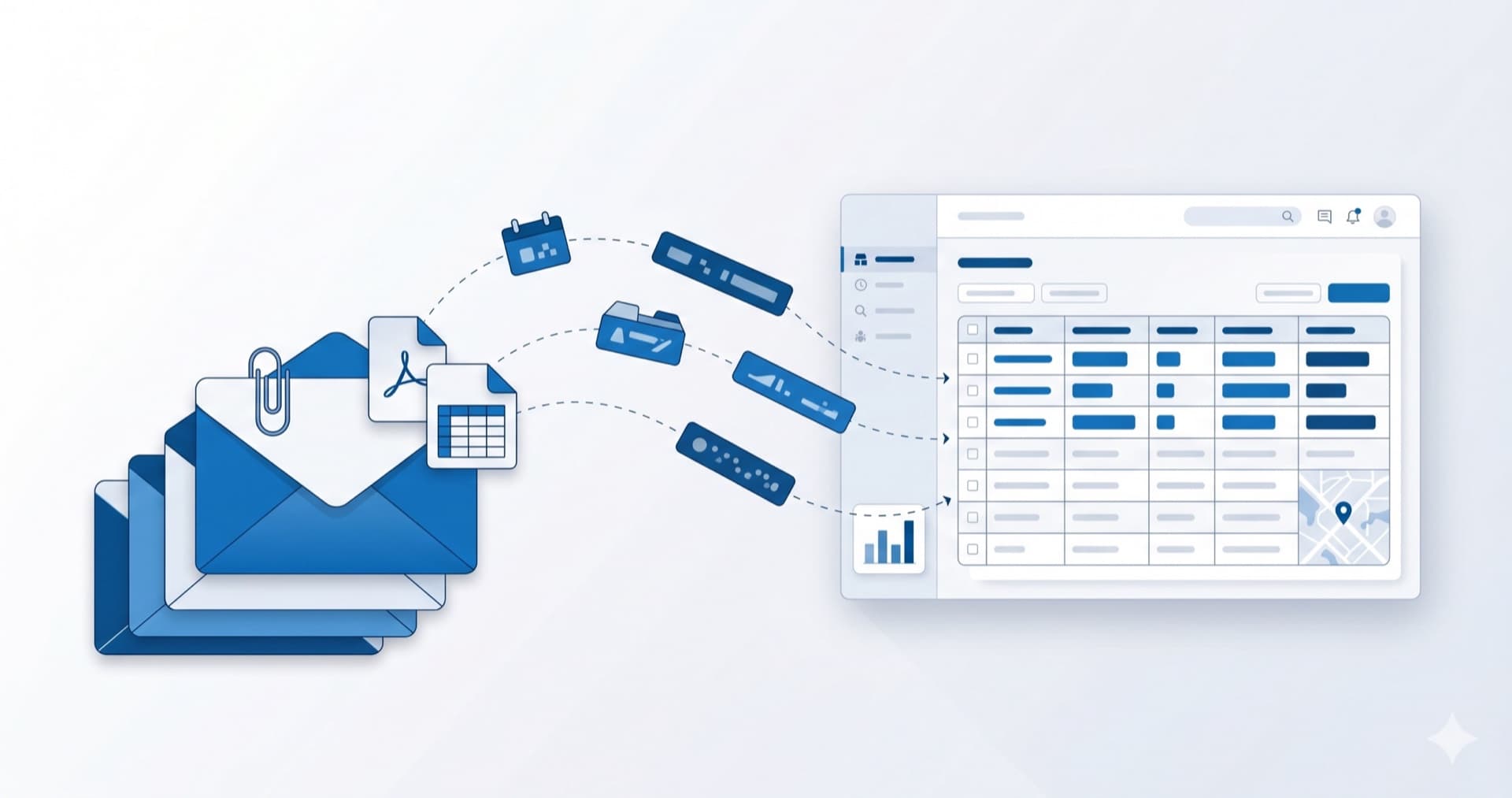
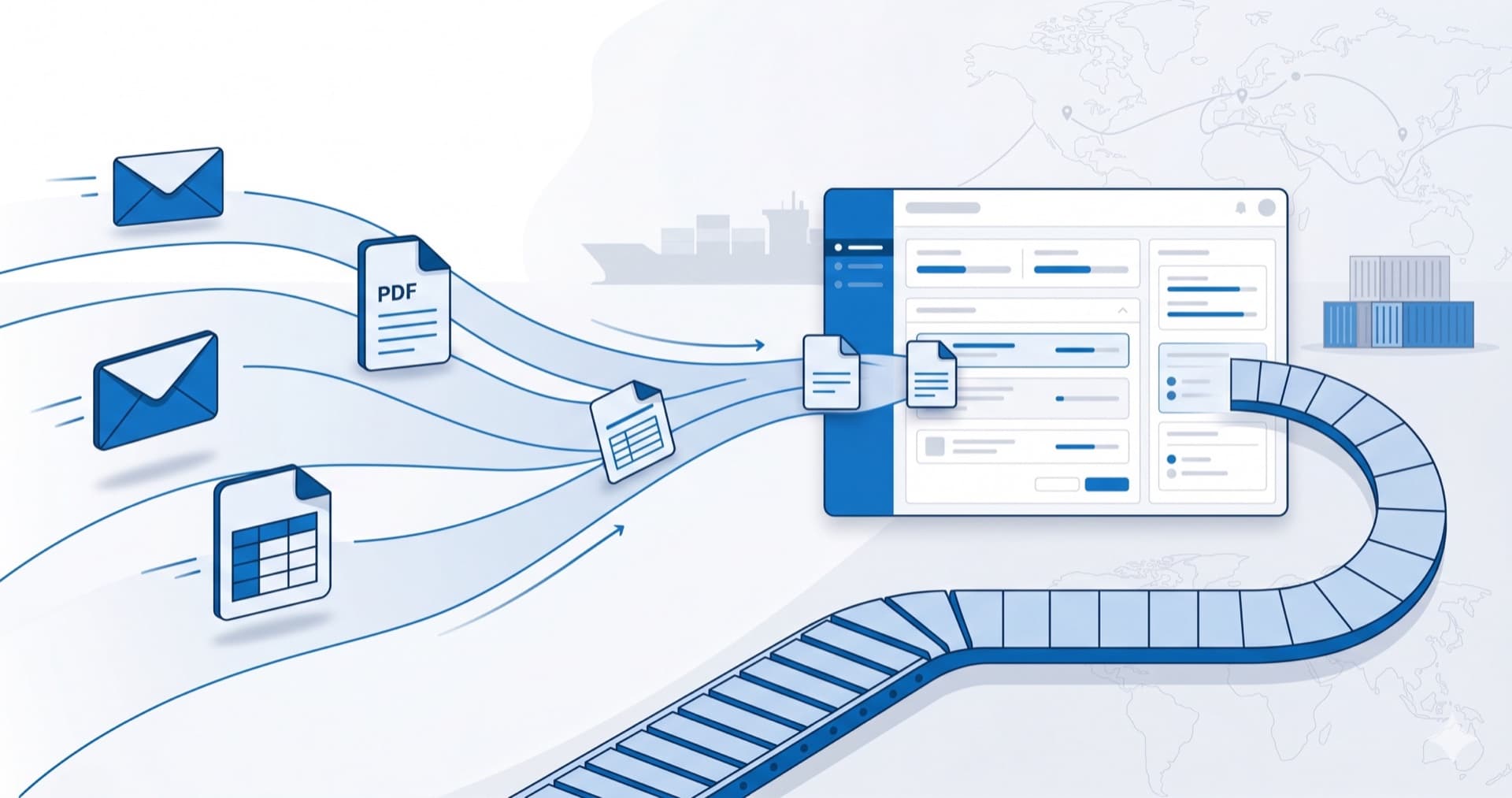
In our own onboardings, the hesitation is rarely about GenAI in general. Teams get stuck on one concrete point: manually retyping orders from emails and PDFs into the TMS. That is where the pain sits, and where the gain shows up fastest.
A typical order flow used to take 4+ hours of manual retyping a day. With automated document processing the system reads the order straight from the PDF, and with email automation it pulls the data directly from the inbox. What is left for the planner is about 15 minutes of checking the exceptions. In practice that delivers around 80% time savings and 99.8% accuracy, and a team grows without hiring extra people.
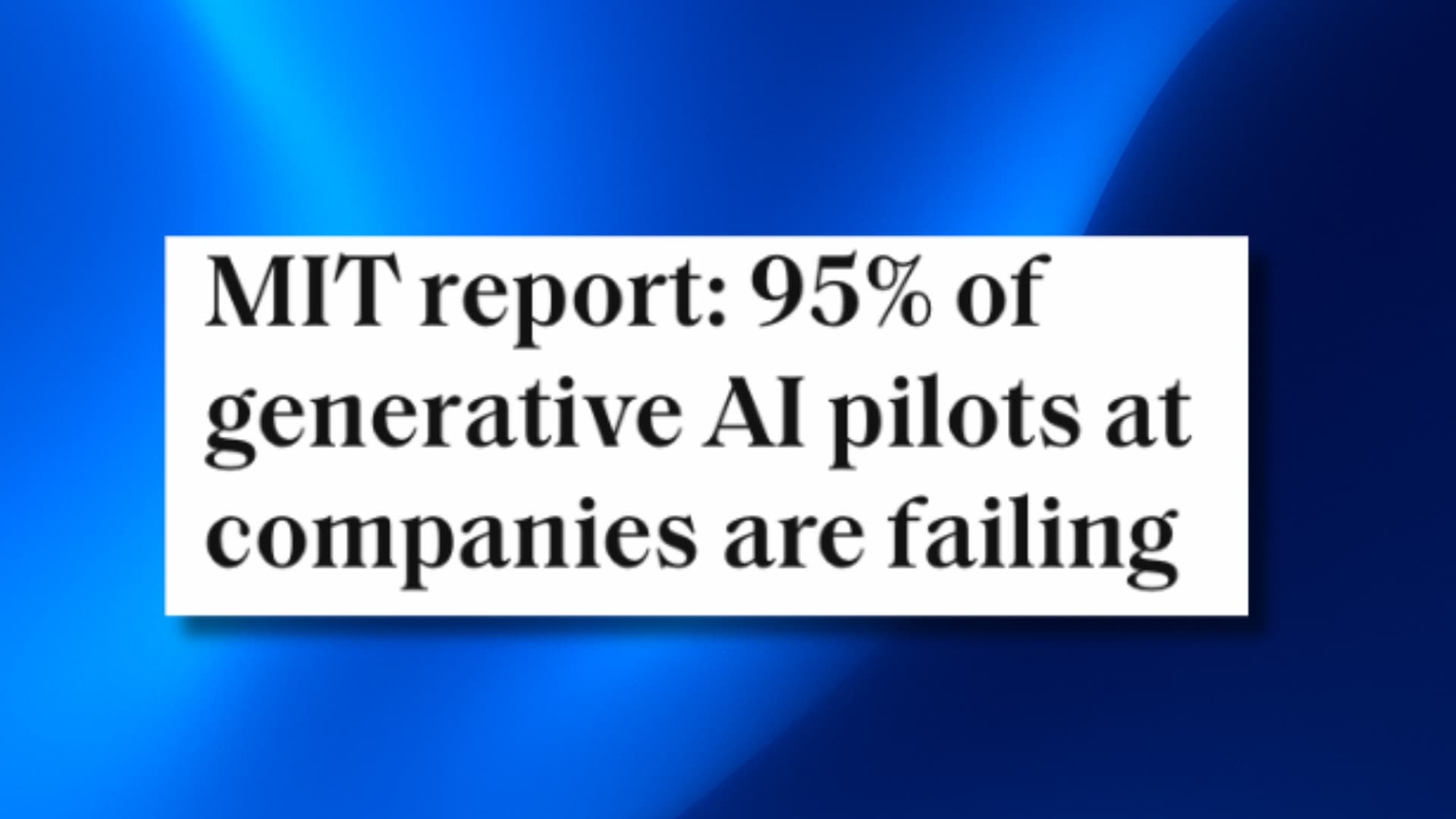
The lesson we keep seeing: don't start with the technology, start with the one process that has the most manual steps. That is exactly why many AI projects in logistics fail before they even begin: set up too big, too far from the daily pain.
Concrete first steps toward successful GenAI adoption
Given the insights above, what can Dutch transport and logistics companies do now to close the gap? A few achievable first steps and recommendations:
Start with a clearly defined pilot use case: Choose a specific problem or process in the organisation where GenAI can add value directly. Preferably focus on a non-mission-critical part to begin with, so experimenting carries little risk. Think of a virtual assistant for customer questions. Many carriers receive repetitive daily questions about delivery times, shipment statuses or stock. A generative AI chatbot can handle these FAQs in natural language. This eases the pressure on customer service and improves response time. The answers are also checkable (before the bot goes live, you train it on correct information). Another low-threshold example is automatically generating quotes or transport documents. With GenAI you can, based on a few inputs (e.g. route, cargo, terms), draft a CMR waybill or quotation that the employee then refines. Such co-pilot applications quickly raise efficiency and let staff get used to working with AI.
Check your data and AI-readiness: Before you start, map out which data and resources you need for the chosen use case. Do we have the necessary data available and of sufficient quality? If not, first focus on collecting and cleaning that data. For a chatbot answering delivery questions you need, for example, historical shipment data and status codes, plus a connection to the track-and-trace system. Also map your current IT environment: is there already access to cloud AI services, do you have developers who know how to work with a GenAI API? It can help to start small with an existing tool (for example OpenAI's GPT via Microsoft Azure, or a Dutch-language variant via GPT-NL/TNO) before building more complex integrations. This preparation gives the project a real chance of success and prevents discovering halfway through that essential pieces are missing.
Set frameworks and involve staff from the start: Communicate clearly internally why the organisation is starting with GenAI and what the expectations are. Draft a brief AI policy or guideline specifically for the pilot: which data may the AI use, who has access to the results, how do we handle feedback? Setting those frameworks lets employees know where they stand. Then create a 'safe sandbox' where a small team can experiment without fear of mistakes. Involve diverse roles in this team: someone from IT/data, someone from operations/planning, someone from customer service, and so on, so a cross-functional team takes all perspectives into account. Let employees contribute ideas for improvements during the pilot. This greatly increases buy-in. Research also shows employees will experiment with AI anyway (around 80% do so regardless of policy), so it is better to guide and support it. By giving room and setting clear rules, you tap into employees' curiosity while minimising risks.
Choose the right partner(s): You don't have to reinvent the wheel alone. Consider working with technology companies or startups specialised in AI solutions for logistics. They can bring existing tools or expertise, so your organisation does not have to build everything from scratch. Many logistics software vendors now integrate AI features, ask your current IT partners what they have on the roadmap. There are also partnerships and knowledge institutes that can help. The Dutch AI Coalition, for example, has a Mobility, Transport and Logistics taskforce where best practices and developments around AI in the sector are shared. Joining such initiatives keeps you up to date on the latest trends and gives access to a network of experts. Universities and colleges are also a valuable partner: through internships or graduation projects you can have motivated talent work on real GenAI questions, often with surprisingly good results and relatively low cost. And don't forget the trade associations: organisations like Transport en Logistiek Nederland (TLN) or Evofenedex are open to innovations that move the sector forward. They may be able to help find subsidies for pilot projects, or facilitate knowledge sharing between members facing similar challenges.
Start small, learn fast and scale up: Begin the implementation small, for example with one department, one process or one customer segment. Monitor the results closely and actively gather feedback from users (both the employees working with the AI and any customers if it is an externally facing application). By continuously measuring and evaluating you can objectively determine the impact. Is the GenAI pilot working as intended? If so, communicate that success widely in the organisation, proof by example will motivate other teams to think about AI applications too. If you run into problems, use those lessons to adjust the approach. You might find, for instance, that the chatbot handles 80% of questions well but fails on 20%; then you can decide to filter that 20% (such as very complex questions) to a human, or train your model further on those specific cases. Iteration is the keyword here. Once the pilot proves its value, you can scale up: give more employees access, expand the scope to other processes, or connect extra data sources to make the AI more powerful. It is important to see AI adoption as a gradual journey, it usually starts with a handful of enthusiasts and then expands step by step. Celebrate the milestones along the way and keep fostering a culture of experimentation.
Quick technology wins: A few GenAI applications that can deliver value relatively quickly in logistics:
AI-generated reports and summaries: have a generative model automatically produce periodic reports (e.g. a weekly overview of transport performance, an inventory report) or summarise long customer emails into action points. This saves managers and planners time.
Planning support: although complex route optimisation is still the domain of specialised algorithms, GenAI can play a supporting role by describing alternative scenarios in text or by searching historical planning data and formulating lessons. It acts as a smart assistant for the transport planner, offering suggestions based on unstructured data (e.g. driver notes, weather reports).
Predictive maintenance content: in warehousing and transport, sensors on machines and vehicles produce a lot of data. GenAI can help turn this stream of maintenance reports and sensor logs into understandable warnings or predictions. This is especially useful as input for mechanics and fleet managers, to gain insight quickly without having to dig through all the raw data themselves.
Translation and multilingual communication: the logistics sector is international and multilingual. GenAI models can translate work instructions, safety regulations or customer correspondence at high speed. This bridges language barriers and reduces miscommunication.
Content creation for sales and marketing: does your logistics company need a blog, newsletter or LinkedIn posts? GenAI can help generate content quickly around, for example, market trends, case studies or new services. A human should of course check factual accuracy and tone of voice, but it significantly speeds up the creative process.
By starting with these kinds of applications, logistics organisations can see value quickly and create a snowball effect toward broader adoption. It is crucial to measure and share successes, not to hide obstacles but to tackle them, and to keep the human dimension front and centre. Ultimately, the future of AI in logistics is one of people and machines: the real power lies in the combination. Generative AI can automate routine work, accelerate insight and unlock creativity, while people make the decisions, build relationships and manage the exceptions.
Conclusion
The lagging implementation of generative AI in the Dutch transport and logistics sector has several causes, from technical and economic hurdles to cultural reluctance and organisational uncertainty. Managers and employees still have mixed feelings about this technology, but as familiarity and experience grow, that perception tilts toward more positivity. Real-world examples, both in the Netherlands and beyond, show that GenAI can indeed deliver substantial benefits in logistics processes, provided it is done well. By proactively tackling the existing obstacles (data quality, cost, knowledge, regulation and change management) and starting small but purposefully, the sector can gradually reap the fruits of GenAI.
The advice, then, is: get comfortable with this technology, learn from small successes and failures, and build an AI-ready logistics chain. Those who take the first steps now, however modest, create a head start for the future. In a time of labour shortages, high customer expectations and complex global chains, generative AI can make the difference between falling behind or staying ahead. The logistics sector has proven more than once that it can renew itself; with the right approach, GenAI can usher in the next acceleration toward more efficient, more flexible and more competitive logistics in the Netherlands.
Want to see what that looks like for your order flow? Book a demo and we'll show you on your own documents what can run automatically.

About the author
Finn
Oprichter & product
Finn is medeoprichter van Chainfill en leidt de productontwikkeling. Hij richt zich op het inzetten van AI om documentverwerking in transport en logistiek te automatiseren.